
16 Years in Business: What Experience Teaches You That Strategy Never Will
February 16, 2026

February marks sixteen years since I started my first business.
Sixteen years of being my own boss. Sixteen years of trying to pay myself a wage (and sometimes not quite managing it). Sixteen years of identity shifts, pivots, evolutions, lessons learned the easy way and, more often than not, the hard way.
In that time, I’ve started three businesses. I’ve hired more than fifty people directly. I’ve interviewed thousands on behalf of my clients. I’ve sold one business and watched it continue on successfully without me. And I’ve had the privilege of seeing behind the scenes of more than a hundred businesses across different industries, sizes, and stages.
That kind of experience gives you something strategy alone never can: perspective.
You start to notice patterns. You see what actually holds businesses together over time — and what quietly wears business owners down.
If You Don’t Design Your Business Around Your Life, You’ll Build Another Job
My first business looked great on paper.
Beautiful office. High standards. Strong work ethic. I was first in, last out, leading from the front. And three years in, I realised I’d accidentally recreated my corporate role, except this time I was the one responsible for paying all the bills.
I hadn’t been clear on the role I wanted to play in my own business. Or how I wanted the business to feel. Or what it was meant to give me beyond income.
That clarity isn’t indulgent. It’s foundational.
If you don’t consciously design your business around the life you want, you’ll wake up one day with a business that dictates your life instead. The question “what do I want my life to look like?” has to be the blueprint, not an afterthought.
Your Team Should Support You, Not the Other Way Around
In my early hiring years, I was incredibly grateful anyone wanted to work for me.
That gratitude turned into over-flexibility. Flexible hours. Flexible roles. Flexible boundaries. Flexible expectations. And, unsurprisingly, growing resentment.
What I see now, both in my own history and with clients, is that flexibility without clarity doesn’t create loyalty or sustainability. It creates imbalance.
Your business needs to be built around your energy, your working style, your capacity, and your goals. If the business bends endlessly around the needs of your team, you end up being the least supported person in it.
That’s not leadership. That’s self-sacrifice disguised as kindness.
Hire Great People, But Don’t Build a Business That Depends on Them
Most business owners remember their first hire vividly. The relief is real. Suddenly there’s oxygen.
But the moment you find yourself thinking, “If this person leaves, we’re in trouble,” that’s a warning sign.
People will come and go. That’s not a failure …it’s reality. What protects your business isn’t individuals holding everything together; it’s systems and processes that don’t live in one person’s head.
This is where systems stop being about efficiency and start being about freedom. Whether you want to sell one day or simply take a proper holiday without checking in constantly, systems are what give you that choice.
Progress Beats Perfection in Growing Businesses
Perfection feels like a high standard, but in practice it often slows teams down.
It creates fear. It stops momentum. It teaches people to wait instead of think.
An always-improving culture, on the other hand, allows people to move forward without needing everything to be flawless. Mistakes become information, not something to hide. Feedback becomes normal, not confrontational.
Over time, I’ve learned that when something breaks in a business, it’s rarely random. It’s a message. A process was unclear. Responsibility wasn’t defined. A system didn’t scale.
When leaders respond with curiosity instead of frustration, solutions appear faster, and trust stays intact.
People Decisions Are Profit Decisions (Whether You Acknowledge Them or Not)
Hiring well, structuring roles clearly, delegating properly, and building sustainable systems aren’t “soft” leadership choices. They are profit decisions.
People chaos is expensive. It costs time, energy, confidence, client experience, and margin. Clarity multiplies results.
Before any investment (a hire, a contractor, a system, an advisor) there needs to be clarity around return. What does success look like in 30, 60, 90 days? What comes off your plate? What improves?
That clarity removes emotional decision-making and replaces it with confidence.
You Can Do Everything, But Doing Everything Will Always Cost You Something
This is the lesson I’m still working on.
Most business owners are highly capable. You’re smart, resourceful, and used to figuring things out. You can do everything.
But doing everything costs time, energy, creativity, joy, and freedom. And no one is coming to tap you on the shoulder and tell you to stop.
That’s the responsibility and the opportunity of leadership. Deciding what matters most, designing your business accordingly, and having the courage to let go of the rest.
Sixteen years in, that’s the work that matters most.
If this reflection has you thinking about how you’re leading, how your team is set up, or how much you’re still carrying, you don’t have to work that out alone.
This is exactly the kind of strategic thinking I support business owners with — helping you design a business that works better, feels better, and supports the life you actually want. If you’d like to explore working together, book a time for a Discovery Call. Let’s chat about your business, your life and how we can build it together.
I work with female business owners at $1-3M who’ve somehow ended up more trapped than ever – working harder, less profitable, exhausted. With over 20 years as an entrepreneur plus expertise in HR, operations, and banking, I help them get strategic so they can finally trust their team, reclaim their time, and scale profitably.
About Paula
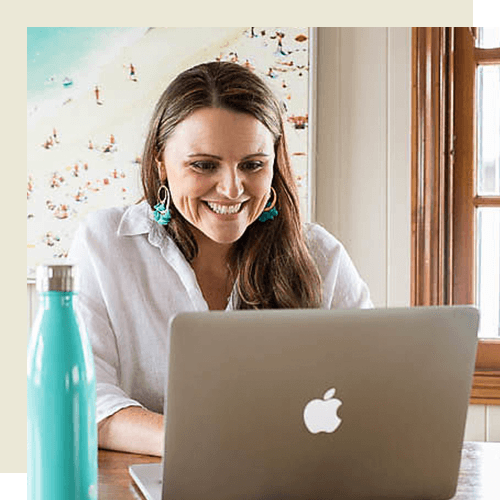
If you're growing a team in-house or online, Paula Maidens can help!
RECENT POSTS
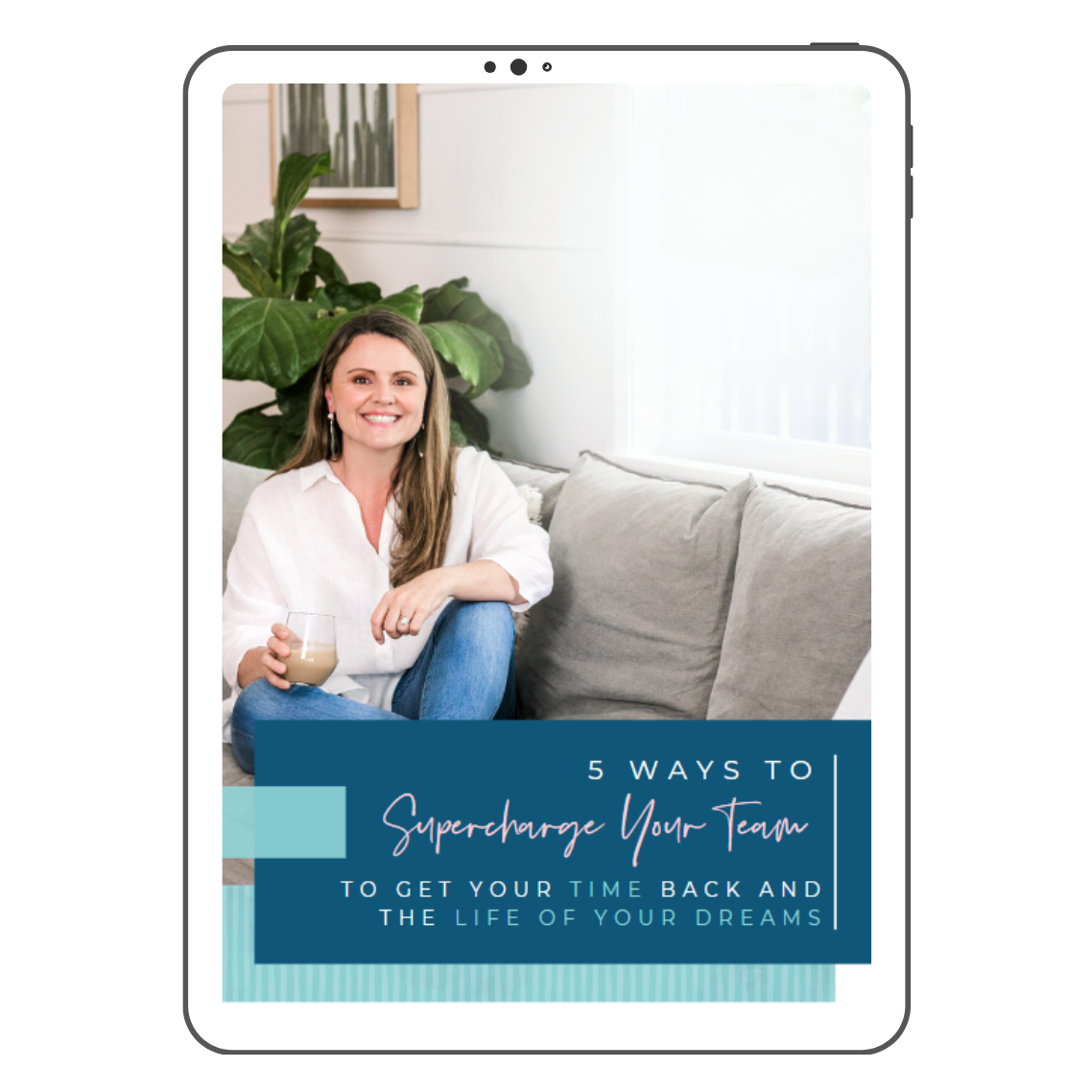
5 WAYS TO
Supercharge your team
TO GET YOUR TIME BACK AND LIVE THE LIFE OF YOUR DREAMS
Enter your details to receive a PDF emailed straight to you. We respect your privacy and will protect your details